
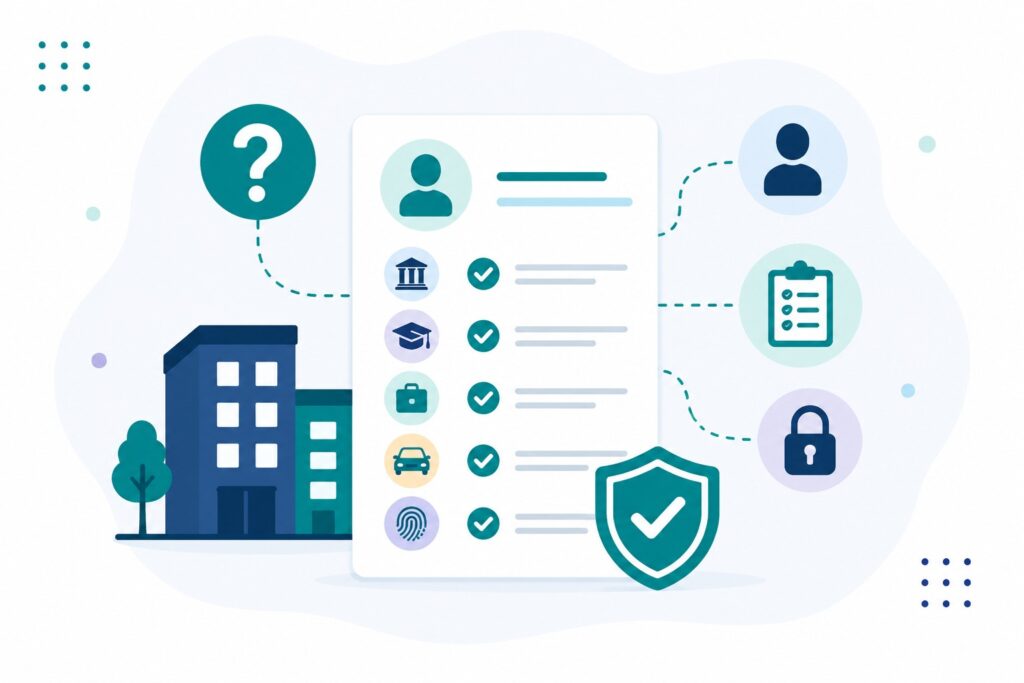
Most people picture a background check as a single search that returns a file on you. That is not how it works, and understanding the actual mechanics explains a lot about why reports take the time they do, why errors happen, and what you can do about them.

Important: There is no single national database of criminal records that employers can search. Every check is assembled from separate sources, one at a time.
Who Actually Runs the Check
In almost every case, the employer does not run the background check themselves. They hire a third party company, and that distinction matters more than almost anything else in the process.
Under the Fair Credit Reporting Act, that company is a consumer reporting agency, and the document it produces is a consumer report. Those are legal terms, not marketing ones, and they trigger a specific set of obligations. The screening company must follow reasonable procedures to assure maximum possible accuracy. You have the right to see the report. You have the right to dispute what is in it.
The division of labor is worth being clear about. The screening company gathers and reports. The employer decides. If something on your report costs you the job, the screening company did not make that call, and disputing the record with the employer will not correct it. The dispute goes to the agency that produced the report.
Where the Information Comes From
A background check is a bundle of separate searches, each hitting a different source:
- County courthouses are the primary source for criminal records, and often the slowest, since some counties still require a researcher to pull files in person
- Federal courts through PACER, which covers federal offenses only and will not show state or county cases
- State repositories, where available, though what they contain and who can access them varies by state
- Motor vehicle agencies for driving records, which come straight from your state DMV
- Former employers and schools, contacted directly or through a verification service, to confirm dates, titles, and degrees
- Credit bureaus, if the employer ordered an employment credit report
- Government lists such as sex offender registries, healthcare exclusion lists, and sanctions databases
Which of these run depends entirely on what the employer ordered. A retail position and a hospital position produce very different reports. Our guide to what shows up on a background check covers each component in detail.
Why There Is No Single Database
The FBI maintains a national criminal history system, but access to it is restricted to law enforcement and to a narrow set of employers specifically authorized by statute, usually through fingerprint checks routed via a state agency. A typical private employer cannot search it.
Commercial screening companies sell products called national criminal databases, and those are useful, but they are not what the name suggests. They are compiled from records that various jurisdictions have chosen to share, and coverage has real gaps. A reputable screening company treats a database hit as a lead rather than a finding, and verifies it at the source courthouse before reporting it.
This is why 2 background checks on the same person can return different results. Different sources, different coverage.
When It Happens in the Hiring Process
Background checks usually come late, after an interview and often after a conditional offer. That timing is partly practical, since checks cost money and nobody wants to run one on every applicant, and partly legal.
Many states and cities have ban the box or fair chance laws that prohibit asking about criminal history until a certain point in the process, sometimes not until after a conditional offer has been made. Where those laws apply, the check itself has to wait. Our state law guides cover the rules for all 50 states and Washington D.C.
What You Are Agreeing To
Before any of this can happen, the employer has to do 2 things. They must give you a clear written disclosure stating that a background check may be obtained, on a document containing nothing else. And they must get your written authorization.
The standalone requirement is strict. The disclosure cannot be folded into the job application, the offer letter, or a stack of onboarding forms. Courts have found disclosures defective for including extra language as minor as a liability waiver.
Read it before you sign. It tells you what type of check is being authorized, and in many cases the authorization is worded to cover reports obtained throughout your employment, not just at hiring.
One variation worth knowing: if the check will include personal interviews about your character or reputation, it becomes an investigative consumer report, which carries an additional disclosure requirement.
Common Misunderstandings
“The employer is looking at my file.” The employer is reading a report assembled by a screening company. They see what was searched and what came back, not a dossier.
“They can see everything.” They see what was ordered and what the law allows to be reported. Federal and state limits both apply, and they are covered in what can be reported on a background check.
“If the report is wrong, I have to convince the employer.” You dispute it with the screening company, which is legally obligated to investigate. The employer is not.
The Bottom Line
A background check is a set of separate searches, run by a company the employer hires, pulled from courthouses and agencies and schools that each hold one piece of the picture. Knowing that explains why reports take time, why mistakes happen, and where to go when they do. If you have one coming, our guide on how to prepare for a background check covers the useful steps, and background check answers for applicants handles the questions people ask most.