
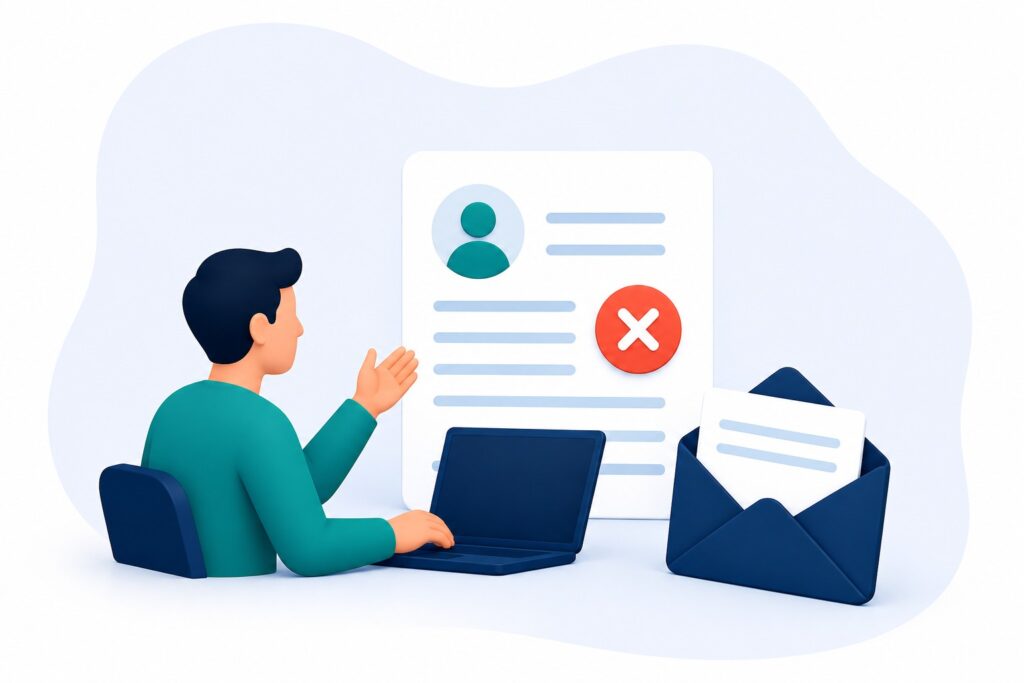
If you believe information in a background check is inaccurate or incomplete, you generally have the right to dispute it. Under the Fair Credit Reporting Act (FCRA), consumer reporting agencies (CRAs) that prepare employment background checks must maintain reasonable procedures to help ensure maximum possible accuracy. When incorrect information appears in a report, applicants may request a reinvestigation of the disputed information, and the CRA is legally required to respond within a set timeframe.
Understanding how the dispute process actually works, what counts as a valid dispute, how long it takes, and what happens if a CRA misses its deadline, matters for both applicants trying to correct their record and employers navigating a pending dispute during a hiring decision.

Important: Applicants generally have the right to dispute inaccurate or incomplete information contained in employment background reports prepared by consumer reporting agencies. This right exists under federal law and cannot be waived by an employer’s internal policy.
The Legal Basis for the Right to Dispute
The dispute process is not just an industry courtesy, it is a specific requirement under Section 611 of the FCRA. The law requires that once a consumer notifies a CRA of a dispute, the agency must conduct a reasonable reinvestigation, free of charge, to determine whether the disputed information is accurate. This obligation applies regardless of how the applicant learned about the inaccurate information, whether from a copy of the report provided during the pre-adverse action process, a personal records request, or another source.
What Types of Errors Can Be Disputed
Background check disputes often involve information that is inaccurate, incomplete, outdated, or improperly matched to the applicant. Common examples include:
- Criminal records belonging to another person with a similar name or identifying information
- Incorrect case dispositions, such as a case reported as a conviction when it was actually dismissed
- Duplicate records for the same underlying case
- Expunged or sealed records that were reported despite legal restrictions on their disclosure
- Incorrect employment verification results, such as wrong dates or job titles
- Incorrect education verification information
- Motor vehicle record inaccuracies
- Identity or address mismatches caused by shared names or clerical errors
Not every dispute involves identity theft or a major reporting error. Even small inaccuracies, a wrong middle initial, a misdated employment record, can affect a hiring decision if left uncorrected, which is why the FCRA treats the right to dispute broadly rather than limiting it to serious cases only.
Who Handles the Dispute: CRA vs. Furnisher
In most employment screening situations, the dispute is handled by the consumer reporting agency that prepared the report, not the employer. Employers generally do not have the ability to directly edit or correct report information themselves, which is why applicants should direct disputes to the CRA rather than the hiring company.
There is a second, less commonly used path: disputing directly with the furnisher, the original source of the information, such as a court, a previous employer, or a school. The FCRA allows consumers to dispute directly with furnishers in some circumstances, and furnishers have their own obligation to investigate and correct inaccurate information they’ve reported. In practice, disputing through the CRA is usually faster and simpler, since the CRA is required to forward the dispute to the relevant furnisher and coordinate the reinvestigation on the applicant’s behalf.
Once notified, the CRA may:
- Review the disputed information and the applicant’s supporting documentation
- Contact data providers, courts, or furnishers directly if necessary
- Reinvestigate the reported information
- Correct or update information when appropriate
- Issue an updated report if changes are made
How the Dispute Process Works, Step by Step
Step 1: Identify the disputed information
The applicant reviews the report and identifies the specific information believed to be inaccurate or incomplete. Vague disputes, such as generally claiming a report is “wrong,” are harder for a CRA to investigate efficiently than a dispute that points to an exact entry.
Step 2: Submit the dispute
The dispute is submitted to the consumer reporting agency, typically by email, an online portal, mail, or telephone. A strong dispute submission should identify the specific information believed to be inaccurate, explain why it is incorrect, and include supporting documentation where available, such as court records, diplomas or transcripts, motor vehicle records, or other official documents relevant to the disputed item.
Step 3: Reinvestigation occurs
The screening company reviews the disputed information and may contact courts, employers, educational institutions, motor vehicle agencies, or other original data sources as necessary to verify or correct the record.
Step 4: Results are communicated
If corrections are made, an updated report is issued to the applicant and, where relevant, to any employer who received the original report within the prior two years. If the information is verified as accurate, the report may remain unchanged, and the applicant must be notified of that outcome as well.
How Long Does a Dispute Take
Under the FCRA, reinvestigations generally must be completed within 30 days of the CRA receiving the dispute. This period may be extended to 45 days if the applicant submits additional relevant information during the reinvestigation process. Some disputes resolve faster, while others involving multiple jurisdictions, courts, government agencies, or manual verification can take longer to fully resolve.
What Happens If the CRA Misses the Deadline
If a CRA fails to complete a reinvestigation within the required timeframe, the disputed information generally must be deleted from the consumer’s file. This is a meaningful consumer protection: a CRA cannot simply ignore a dispute or run out the clock while continuing to report unverified information. Once a reinvestigation is complete, whether information is corrected, deleted, or verified as accurate, the CRA must notify the consumer of the results in writing, generally within five business days of completing the reinvestigation.
If information is deleted or modified as a result of a dispute, and it is later found to be reinserted into the file, the FCRA requires the CRA to notify the consumer within five business days of the reinsertion and certify that the information is accurate.
What Happens During an Active Hiring Process
If an employer is considering a negative hiring decision based on background check information, the FCRA generally requires the employer to provide a pre-adverse action notice, a copy of the report, and a Summary of Rights before finalizing that decision. This gives the applicant a real opportunity to review the report and file a dispute before the employer acts.
It is important to understand a limitation here: the FCRA does not require employers to pause or delay a hiring decision simply because a dispute has been filed. Applicants who submit a dispute during an active hiring process should be aware that a final employment decision may still proceed on its own timeline, independent of how quickly the dispute itself resolves. This is one of the reasons the pre-adverse action waiting period exists in the first place, to create a window for disputes before, rather than after, a final decision is made.
Can Accurate Information Be Removed?
Generally, no. The dispute process exists to correct inaccurate or improperly reported information, not to remove truthful information simply because it may negatively affect employment opportunities.
That said, there are situations where otherwise accurate information may still be restricted from reporting, not because it’s false, but because reporting it isn’t permitted. These situations can include:
- State law limitations on how far back certain information may be reported
- Expungement or sealing orders that legally restrict disclosure of an otherwise accurate record
- Federal or state reporting time limits
- Local hiring regulations that restrict use of certain accurate information in employment decisions
Because these rules vary by jurisdiction, what can and cannot be reported may differ significantly depending on where the applicant lives and where the employer operates.
Escalating a Dispute
If a CRA fails to properly investigate a dispute, misses its deadline, or continues reporting information the applicant believes is inaccurate after an unsatisfactory result, applicants have options beyond re-submitting the dispute. These include filing a complaint with the Consumer Financial Protection Bureau (CFPB), filing a complaint with a state attorney general’s office, and, in cases involving a pattern of noncompliance, pursuing a private lawsuit under the FCRA. The FCRA permits consumers to recover statutory damages, actual damages, and attorney’s fees in cases of proven violations, which is part of why CRAs generally have strong incentive to handle disputes properly the first time.
Common Misunderstandings
“Disputing a background check automatically removes the record.” Not necessarily. Information verified as accurate through the reinvestigation process may remain on the report.
“Only criminal records can be disputed.” Applicants may dispute many types of employment screening information, including employment verifications, education verifications, and motor vehicle records, not just criminal history.
“Employers directly change the report.” In most cases, the employer has no ability to edit report content. The consumer reporting agency handles the reinvestigation and any resulting correction.
“A dispute guarantees employment.” The dispute process addresses report accuracy, not hiring outcomes. A hiring decision may still depend on multiple factors beyond the specific information that was disputed.
The Bottom Line
Background check disputes exist to promote accuracy and fairness in a process that carries real consequences for both applicants and employers. For applicants, understanding dispute rights, and acting quickly when reviewing a pre-adverse action notice, can help correct reporting errors before a final hiring decision is made. For employers, following proper adverse action procedures, understanding that disputes do not automatically pause a hiring timeline, and working with a reputable, compliance-focused screening provider all help reduce risk and support a fair, defensible hiring process.