
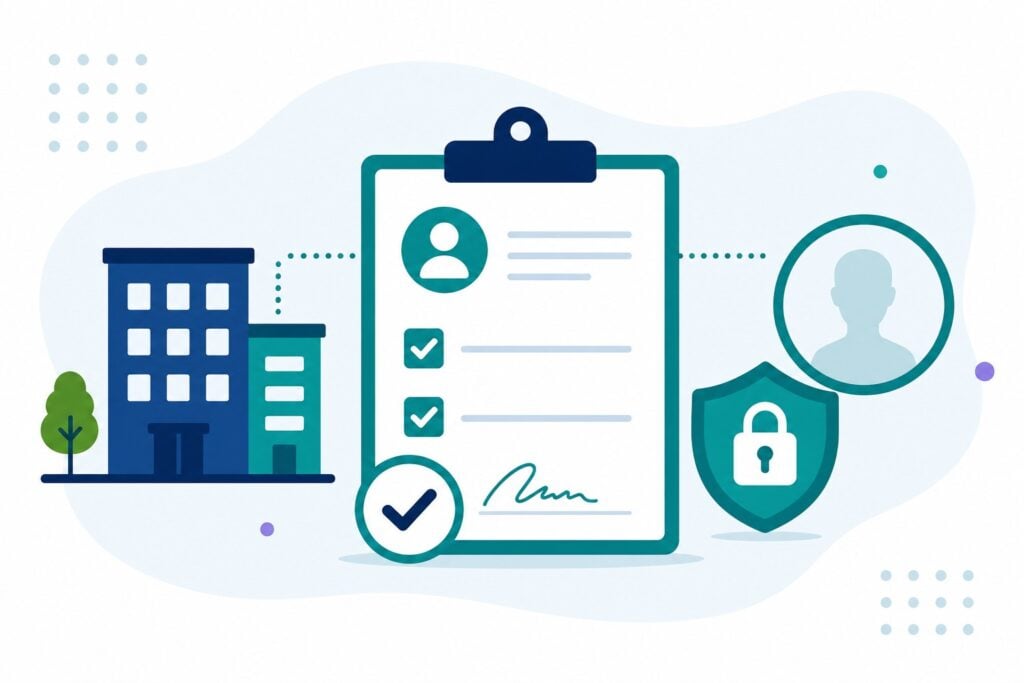
Yes. If an employer is using a third-party background screening company to run a check, they generally cannot do so without first providing disclosure and obtaining written consent. This isn’t a courtesy, it’s a legal requirement under the Fair Credit Reporting Act (FCRA), and skipping it is one of the most common, and most litigated, compliance failures in employment screening.

Important: The disclosure and authorization requirement applies when a background check is obtained through a third-party consumer reporting agency. It generally does not apply the same way if a small employer independently looks up publicly available information without hiring a screening company.
Disclosure and Authorization Are Two Separate Steps
These two terms are often used interchangeably, but they refer to distinct legal requirements that both have to happen before a background check can be run.
Disclosure
Disclosure means the employer must clearly tell the applicant, in writing, that a background check may be obtained for employment purposes. This has to be a standalone document, it cannot be folded into a job application, a liability waiver, or other onboarding paperwork. The point is that the applicant cannot reasonably miss it, buried inside unrelated language.
Authorization
Authorization is the applicant’s signed consent allowing the background check to actually proceed. This can be collected on paper or electronically, but it must be obtained before the report is requested, not after the fact, and not implied by simply submitting a job application.
Why Both Steps Are Legally Required
The FCRA requires both because they serve slightly different purposes: disclosure ensures the applicant knows a check may happen at all, while authorization confirms the applicant has actually agreed to it. An employer who provides disclosure but never obtains signed authorization has not satisfied the requirement, and the reverse is true as well, authorization without proper disclosure doesn’t meet the standard either.
What Happens If an Employer Skips This Step
If a background check is run without proper disclosure and authorization, the employer, and potentially the screening company, can face real legal exposure. The FCRA allows for statutory damages between $100 and $1,000 per violation, even without proof of actual harm to the applicant, along with the possibility of uncapped punitive damages if the violation is found to be willful. Attorney’s fees and court costs may also be awarded if the applicant prevails.
Because a single defective disclosure form or missing authorization process tends to affect every applicant screened the same way, this type of violation is a frequent basis for class action lawsuits, not just individual claims.
Can an Applicant Withdraw Consent?
Once authorization is given, an applicant generally cannot unilaterally stop a background check already in progress simply by changing their mind, though they retain the right to withdraw from the job process entirely at any point. If an applicant has concerns about a check after authorizing it, the more relevant protections come later in the process, specifically the right to dispute inaccurate information and the adverse action procedures that apply before any negative decision is finalized.
Does Verbal Permission Count?
No. The FCRA specifically requires written authorization, a verbal agreement to a background check does not satisfy this requirement, regardless of how clearly it was communicated. This is part of why electronic authorization systems have become common, they create a documented, timestamped record of consent that can be produced later if a dispute arises.
Does This Apply to Current Employees, Not Just New Hires?
Yes. The same disclosure and authorization requirements apply when an employer runs a background check on an existing employee, for a promotion, reassignment, or periodic rescreening, not just during initial hiring. Employers sometimes assume these requirements only apply to the pre-employment stage, but the FCRA’s obligations attach to the act of obtaining a consumer report for employment purposes generally, regardless of when in someone’s employment that happens.
State Law Can Add Requirements
Beyond the