
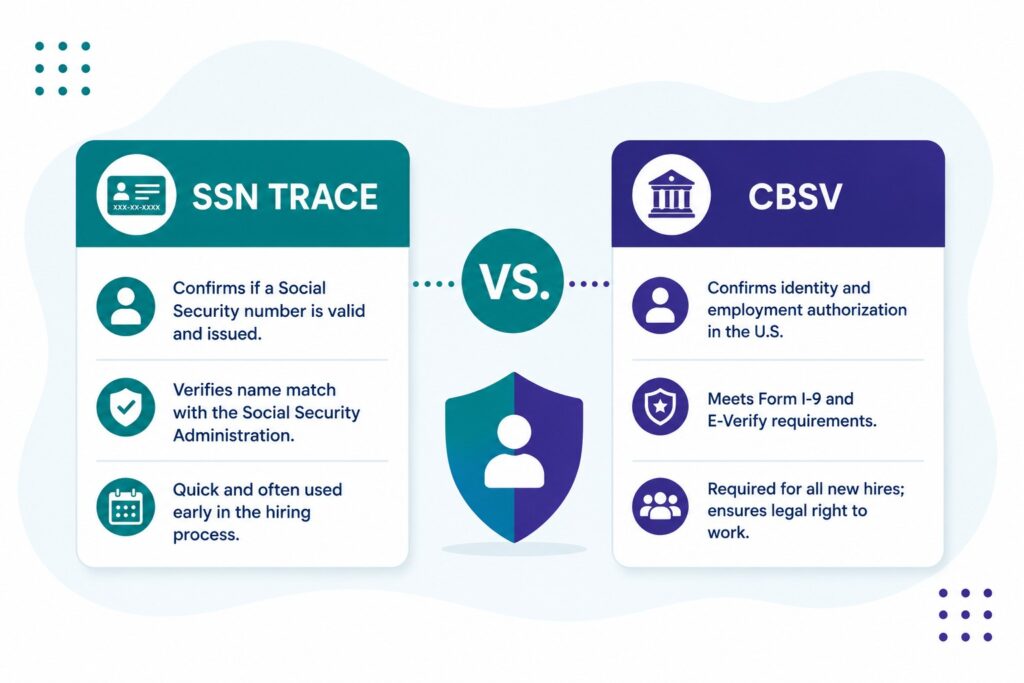
An SSN trace and CBSV are both commonly used in employment screening, and both involve a Social Security number, but they serve entirely different purposes and come from entirely different sources. Confusing the two is common, and understanding the difference matters for knowing what each one actually confirms, and what neither one does.

Important: Neither an SSN trace nor CBSV is a criminal background check. Both relate specifically to identity and history associated with a Social Security number, not criminal records.
What an SSN Trace Does
An SSN trace searches compiled credit header data and other commercial databases associated with a given Social Security number. It surfaces historical information, names and aliases associated with the number, address history, and date ranges tied to each address, that helps a screening company identify where else to search for criminal records and other relevant information. It’s a research tool built around commercially compiled data, not a direct check with the government agency that actually issues Social Security numbers.
What CBSV Actually Is
CBSV stands for Consent Based Social Security Number Verification, and it’s a service offered directly by the Social Security Administration (SSA) itself, not a third-party database. CBSV verifies whether a specific name, date of birth, and Social Security number combination matches what the SSA has on file. It returns a simple match or non-match result, confirming (or not confirming) that the number belongs to the person claiming it, according to the SSA’s own records.
The Core Difference
The clearest way to understand the distinction: an SSN trace tells you about history, past addresses, known aliases, sourced from commercial data compilations. CBSV tells you about identity match, whether a specific name and SSN combination is genuinely valid according to the government agency that issued it. One is a research and investigative tool; the other is a direct identity verification against an authoritative federal source.
- SSN trace: Commercial database, surfaces address history and aliases, helps identify jurisdictions to search
- CBSV: Direct SSA verification, confirms whether name, DOB, and SSN match federal records
CBSV Requires Specific, Documented Consent
Because CBSV queries the SSA directly, it comes with its own formal consent requirement, separate from a general FCRA background check authorization. Employers or their screening providers generally need a specific, signed consent form authorizing the SSA verification, and the SSA has its own registration and enrollment process for organizations that want to use the CBSV service at all. This is a more formal, government-administered process than the standard authorization used for a commercial SSN trace.
What CBSV Does Not Do
CBSV does not return address history, employment history, or any information beyond a match or non-match confirmation. It won’t tell an employer where someone has lived, and it isn’t a tool for identifying additional jurisdictions to search for criminal records, that remains the function of an SSN trace. CBSV also doesn’t verify work authorization or immigration status, that’s a separate process entirely, handled through E-Verify or Form I-9, not CBSV.
Share this article: